I’ve spent the last year and a half using Function Health, so I know the platform well enough to see where it delivers and where it falls short. More recently, I decided to try Superpower and compare the two side by side, from the blood draw and dashboard experience to the clinician notes and overall value. Both are trying to make preventative health more accessible, but after using both, I came away with a pretty clear view of which one offers the better experience for most people.
Superpower vs Function Health
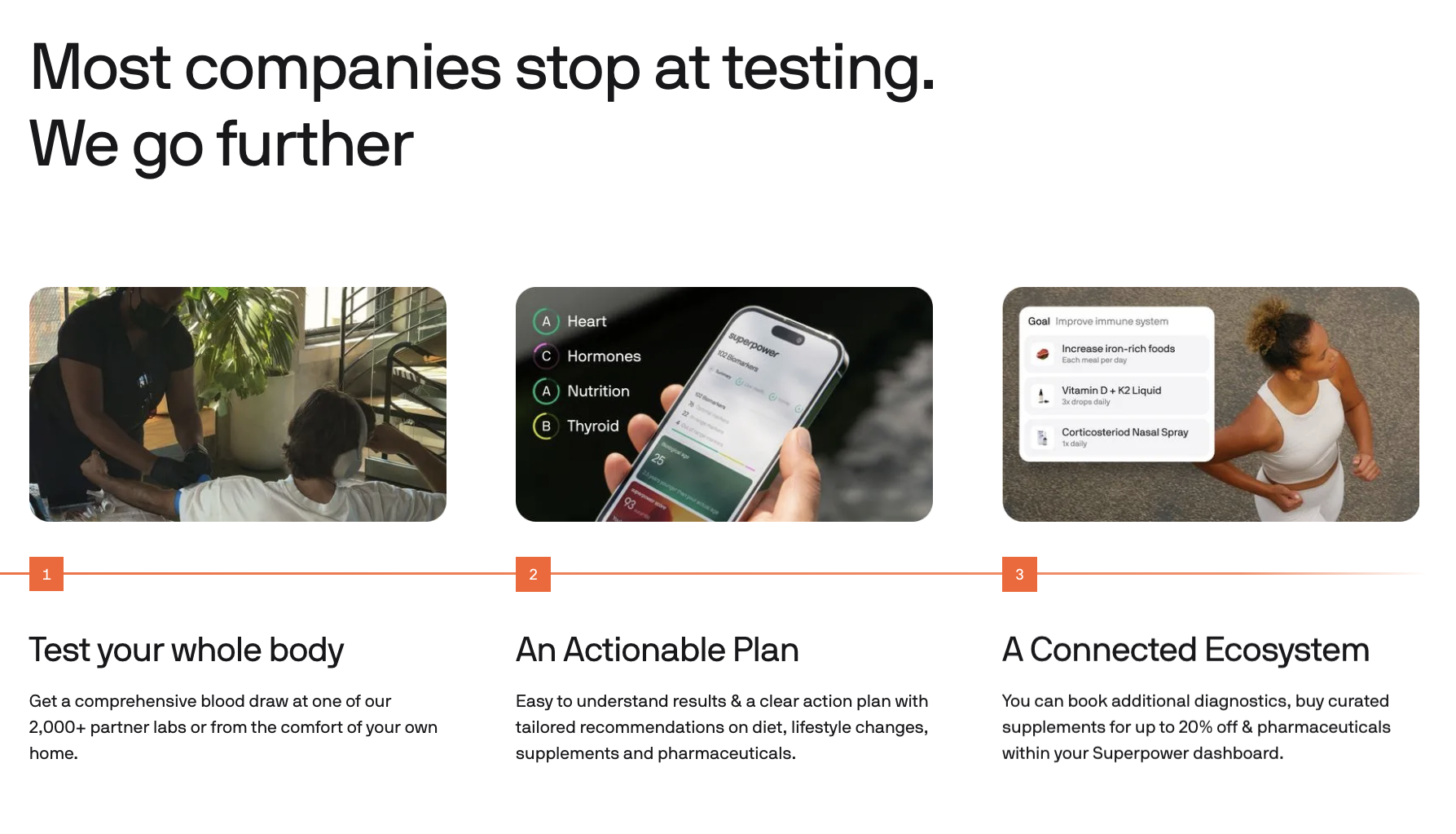
When it comes to the blood draw itself, both Superpower and Function Health work pretty much the same way. You sign up, a doctor affiliated with the service orders your labs, and then you go to a local Quest Diagnostics location. With more than 2,000 sites nationwide, odds are there’s one near you. The actual draw is identical either way. You’re using the same certified lab infrastructure your own doctor would use.
The real difference shows up in how the results come back. Superpower gives you everything at once, usually within a week of the draw. Function Health releases results in stages, with a few markers after the first day, a few more after the second, and so on over several days. For me, Superpower’s approach is better because it lets you see the full picture immediately. When you’re looking at bloodwork, context matters. Partial results in isolation can be more confusing than helpful.
Dashboard & UI
This Is Where Superpower Pulls Ahead
I’ve been using Function Health’s dashboard for well over a year. It works. It gets the job done. But after spending time with Superpower, Function Health’s dashboard feels clunky.
Superpower’s interface feels cleaner and more intuitive. The layout is organized into clear workflows, so it’s easy to see where you stand, what needs attention, and what to do next. It feels like it was built by people who understand how frustrating traditional healthcare can be. From what I understand, that’s exactly what drove the company. Co-founders Jacob Peters and Max Marchione built Superpower after dealing with misdiagnoses, unresolved symptoms, and a medical system that tends to focus more on treating illness than preventing it.
One feature that stood out to me was the integrated marketplace. When a biomarker reading is out of range, Superpower doesn’t just highlight it. It also suggests curated, evidence-backed supplements from brands like Thorne and Pure Encapsulations. I already used these brands, so it was a nice surprise to see them offered here at a discount. To me, Superpower’s approach felt more like a knowledgeable friend pointing me toward something useful than a company trying to squeeze in an upsell.
Biomarker Depth
Function Health tests more, But more isn’t always better
Function Health clearly wins on volume. For $499 a year, it tests 100+ biomarkers across two annual draws. Superpower’s base plan is $199 and covers 60+ core markers in one annual draw, with additional panels available at extra cost.
But in my experience, more isn’t always better. I was dealing with elevated inflammation, and my hs-CRP had come back high. Function Health’s clinician notes felt scattered. They pointed in several possible directions, but they didn’t lead to anything especially actionable. I ended up spending a lot of time using AI tools like Claude and ChatGPT to cross-reference my results with my symptoms and health history. Eventually, I started to suspect gut dysfunction was playing a major role.
This is where Superpower surprised me. Their clinician notes actually confirmed what I had pieced together through all that independent research. It all clicked. Even though Function Health tested more biomarkers, the output felt more like a polished data export than a real interpretation. It was impressive in scope, but it didn’t offer the kind of connective reasoning that helps you understand what the results mean and what to do next.
Clinician Notes & Actionability
Superpower’s Biggest Win
For me, this is the biggest difference between the two platforms, and it’s ultimately why I prefer Superpower.
Function Health’s insights sometimes felt like a polished AI summary. The information was structured and easy to read, but I didn’t always see how different markers related to each other or why something might be shifting over time. Superpower’s analysis felt more like a doctor explaining my results after reviewing the full picture. Their system seems better at mapping relationships between markers. An inflammation marker, for example, doesn’t exist on its own. It connects to things like metabolic health, gut function, stress hormones, and more.
I’m not sure whether that’s because Superpower uses a more sophisticated model, has stronger clinical context rules built by its physician team, or draws on broader population-level health data, but the result is the same: the insights are much more useful. The clinician notes I got from Superpower didn’t just confirm what I suspected. They surfaced the same connections I’d spent hours trying to piece together myself, and they did it in a way that didn’t require a medical degree to understand. If you actually want to understand your health instead of just cataloging it, that difference matters.
Pricing
Superpower Is the Clear Value Winner
Function Health costs $499 a year. Superpower is $199. I’ve seen Function Health offer deals that brought the price down to around $365, but even then, Superpower is still meaningfully cheaper.
It’s true that Function Health includes two annual blood draws while Superpower includes one, and Function’s panel is broader. But I don’t think the extra data justifies the higher price if it doesn’t lead to clearer answers. With Superpower, you can order additional retests for $179 each. That gives you the flexibility to monitor specific markers without paying for a more expensive membership tier.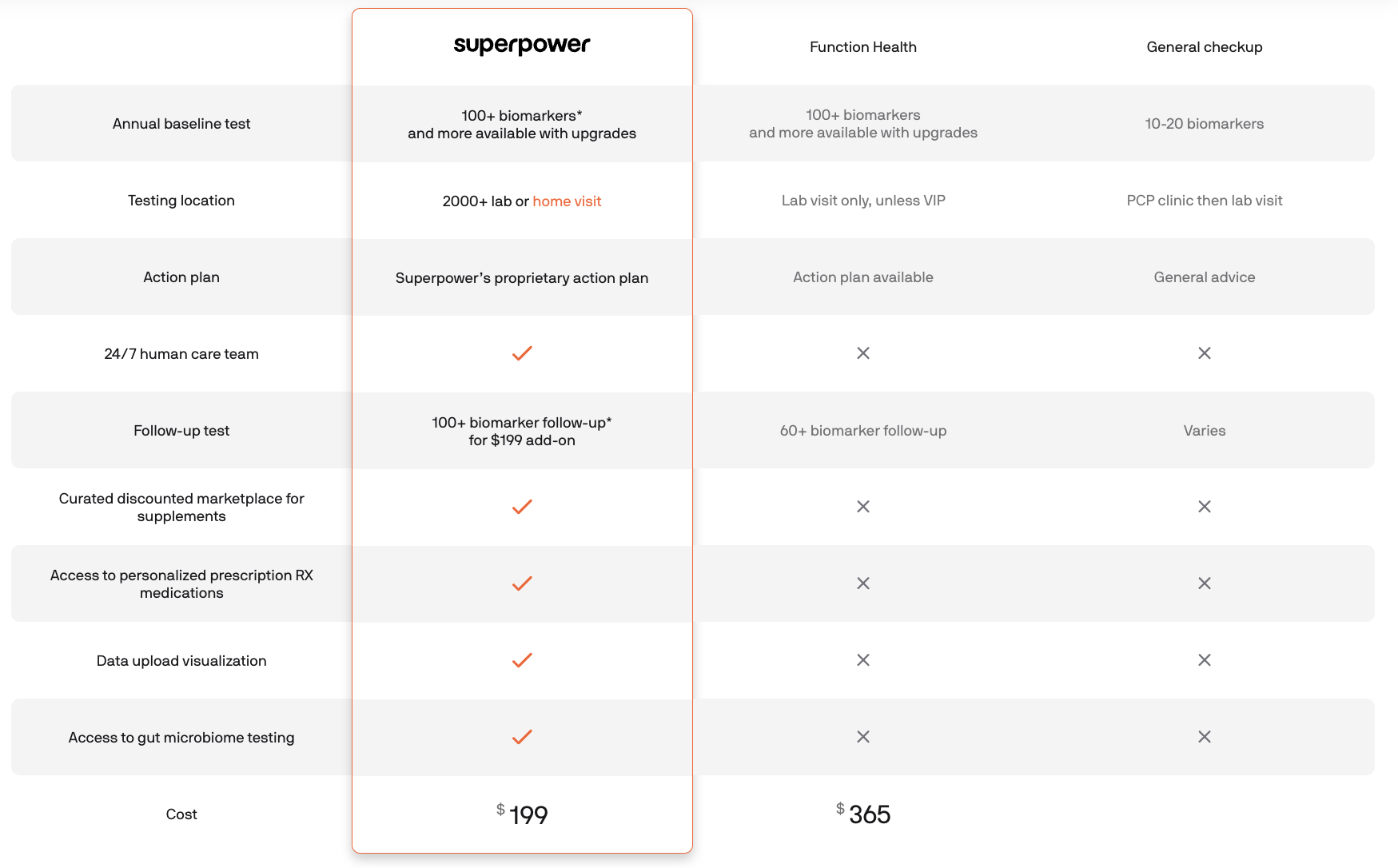
One more thing I noticed: canceling Function Health isn’t as simple as clicking a button. You have to fill out a form and wait for someone to get back to you. Superpower’s membership model feels cleaner on that front. It’s a small detail, but I think it matters when you’re deciding whether a subscription fits your life.
Verdict!
I genuinely respect what both Function Health and Superpower are trying to do. But after using both, I think Superpower offers the more intuitive overall experience. The clinician insights are more actionable, the marketplace is better designed, and the price is hard to argue with. Function Health still has the edge in raw biomarker volume, and for people who care most about having as much data as possible, that may be enough to tip the scale.
For me, it keeps coming back to the clinician notes. That’s where Superpower wins decisively. I’ve made my decision: I’m fully switching from Function Health to Superpower, and I don’t see myself going back.

Note: This is a guest post by Sairaj

Leave a Reply